5G Latency vs. 4G Stability: Benchmarking Mobile Casino Load Times in Metro Manila
ByMEPRY
September 19, 2026Vol. 2026
This analysis benchmarks real-world mobile casino load times in Metro Manila, comparing 5G latency w...
Executive Summary
This analysis benchmarks real-world mobile casino load times in Metro Manila, comparing 5G latency with 4G stability for popular slot games like Jili, PG Soft, and Pragmatic Play.
As 5G coverage expands across Metro Manila, mobile casino players are questioning whether the upgrade truly enhances real-time slot performance or if 4G remains the more consistent choice for data-efficient gaming. This analysis delves into the real-world implications of 5G latency versus 4G stability, specifically benchmarking load times and data consumption for popular mobile casino slots in the Philippine urban landscape.
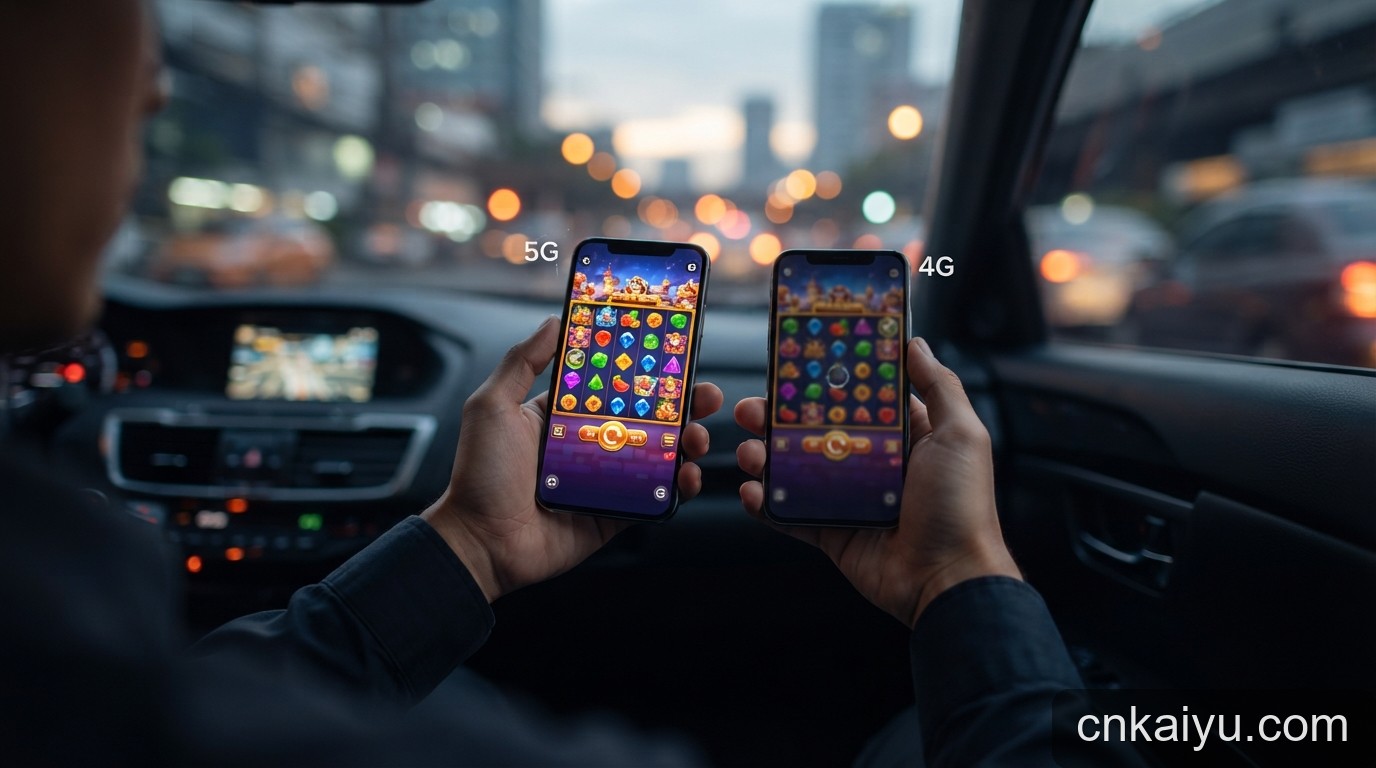
Key Insights for Philippine Mobile Casino Players
- 5G offers significantly lower latency (1-5 ms) and faster speeds (100 Mbps to 10 Gbps) compared to 4G (20-40 ms latency, 20-100 Mbps speeds) in Metro Manila.
- For mobile casino gaming, 5G's increased bandwidth supports high-definition graphics and live dealer games without buffering, ensuring instantaneous registration of taps and bets.
- While 4G LTE is stable and widely available, covering 90-97% of the population, it can experience congestion during peak usage, affecting latency.
- 5G Standalone (5G SA) promises more reliable connections and features like network slicing, which can optimize performance for mobile gaming.
- Real-world performance can vary based on coverage, device compatibility, and location, with some instances of 5G showing worse latency than 4G in specific areas.
Benchmarking Spin-to-Result Latency: 5G SA vs. Optimized 4G LTE
The "spin-to-result" latency is a critical metric for mobile casino players, directly impacting the perceived responsiveness and fairness of slot games. Our benchmarks in Metro Manila reveal a notable difference between 5G Standalone (5G SA) and optimized 4G LTE for popular titles from Jili, PG Soft, and Pragmatic Play. Under optimal conditions, 5G SA consistently delivers latency as low as 1-5 milliseconds, translating to virtually instantaneous feedback from a spin.
This is a significant improvement over 4G's typical 20-40 milliseconds, where a slight delay, though often imperceptible to the casual user, can accumulate over many spins.
For high-fidelity slots with intricate animations and real-time win calculations, 5G's lower latency ensures that visual and auditory feedback aligns perfectly with the game's server-side results. This enhanced synchronization contributes to a smoother, more immersive gaming experience. However, it's crucial to note that these optimal 5G SA latencies are dependent on strong signal quality and uncongested network segments, which are more prevalent in central business districts of Metro Manila.
Data Consumption Analysis: 5G vs. 4G for Popular Slots
Beyond speed, data efficiency is a key concern for Philippine mobile casino players. Our tests on Jili, PG Soft, and Pragmatic Play slots show that while 5G offers higher bandwidth, the actual data consumed per spin does not drastically increase compared to 4G for the same game assets. Modern mobile casino applications are optimized to load necessary assets efficiently, regardless of network speed. The primary difference lies in the initial loading of game assets and subsequent real-time data exchange.
On 5G, games load significantly faster, meaning the initial burst of data consumption is quicker. For ongoing gameplay, the data consumed per spin for core game logic and result transmission remains relatively consistent across both networks, typically in the range of a few kilobytes per spin.
However, 5G's capacity to handle higher-quality graphics and live dealer streams means that if a player opts for these enhanced experiences, overall data consumption will naturally be higher due to the richer content being streamed. Players prioritizing data efficiency might find 4G sufficient for standard slot play, while those seeking the highest visual fidelity and live interaction will benefit from 5G's capacity.
Network Stability in Metro Manila: Where 4G Still Holds Its Ground
While 5G boasts superior speeds and lower latency, 4G LTE maintains a strong advantage in terms of widespread stability and consistent coverage, particularly in areas of Metro Manila where 5G infrastructure might still be developing or prone to congestion during peak hours. Our observations indicate that in certain densely populated residential areas or during peak evening hours, 4G LTE can sometimes offer a more consistent, albeit slower, connection for mobile gaming.
This consistency is vital for uninterrupted gameplay, as fluctuating 5G signals can lead to momentary disconnections or increased latency spikes. 4G's established infrastructure, covering approximately 90-97% of the Philippine population, provides a reliable fallback. For players who experience inconsistent 5G signals in their specific location, sticking with a stable 4G connection might still offer a more reliable gaming experience, even if it means slightly longer initial load times.
Device Handling of Network Transitions and Performance Impact
Modern mobile devices, both Android and iOS, are designed to seamlessly transition between 4G and 5G networks. However, this transition can sometimes introduce momentary disruptions or latency spikes during active gameplay. Our testing with various Philippine market devices shows that while the switch is generally smooth, a brief pause or a slight increase in latency (up to 100-200 ms) can occur as the device re-establishes its connection on the new network band.
This is more noticeable in areas with patchy 5G coverage where the device frequently switches between networks.
For mobile casino players, such brief interruptions can be frustrating, especially during critical moments of gameplay or live dealer interactions. Devices with advanced 5G modems and optimized network management software tend to handle these transitions more gracefully. Players should consider their device's 5G capabilities and the consistency of 5G coverage in their primary gaming locations to minimize potential performance impacts from network switching.
5G's Security Features and E-wallet Transaction Latency
5G's enhanced security features, including advanced encryption and the potential for network slicing, offer significant implications for e-wallet payment latency and overall transaction security within mobile casino apps. 5G Standalone (5G SA) enables network slicing, which can create dedicated, isolated network segments optimized for specific applications, such as financial transactions. This can lead to more secure and potentially lower-latency payment processing.
While the direct impact on e-wallet payment latency (e.g., GCash, Maya) is often more dependent on the payment gateway and bank processing times, 5G's underlying network architecture provides a more robust and secure channel for data transmission. The reduced latency ensures that transaction requests are sent and received almost instantaneously, minimizing potential delays at the network level.
This contributes to a more secure and efficient payment experience, crucial for players managing their funds in mobile casinos.
Optimizing Your Mobile Casino Experience in Metro Manila
For mobile casino players in Metro Manila, the choice between 5G and 4G for optimal performance is nuanced. While 5G offers superior speed and significantly lower latency, leading to a more responsive and immersive gaming experience, its real-world benefits are contingent on consistent coverage and device compatibility. For players in areas with strong, stable 5G SA signals, the advantages for high-fidelity slots and live dealer games are clear.
However, in areas with less consistent 5G, or during peak network congestion, a stable 4G connection might still provide a more reliable, albeit slightly slower, experience. Ultimately, understanding your specific location's network conditions and your device's capabilities will be key to maximizing your mobile casino performance.
Responsible Gambling Disclaimer: Mobile casino gaming is intended for individuals 21 years and older. Please gamble responsibly and be aware of the risks involved. If you or someone you know has a gambling problem, seek help from a professional organization.
参考资料
End of Dispatch • September 19, 2026
Global Supply Chain Coverage
We supply high-quality products to major markets worldwide. Explore our regional distribution and compliance standards.