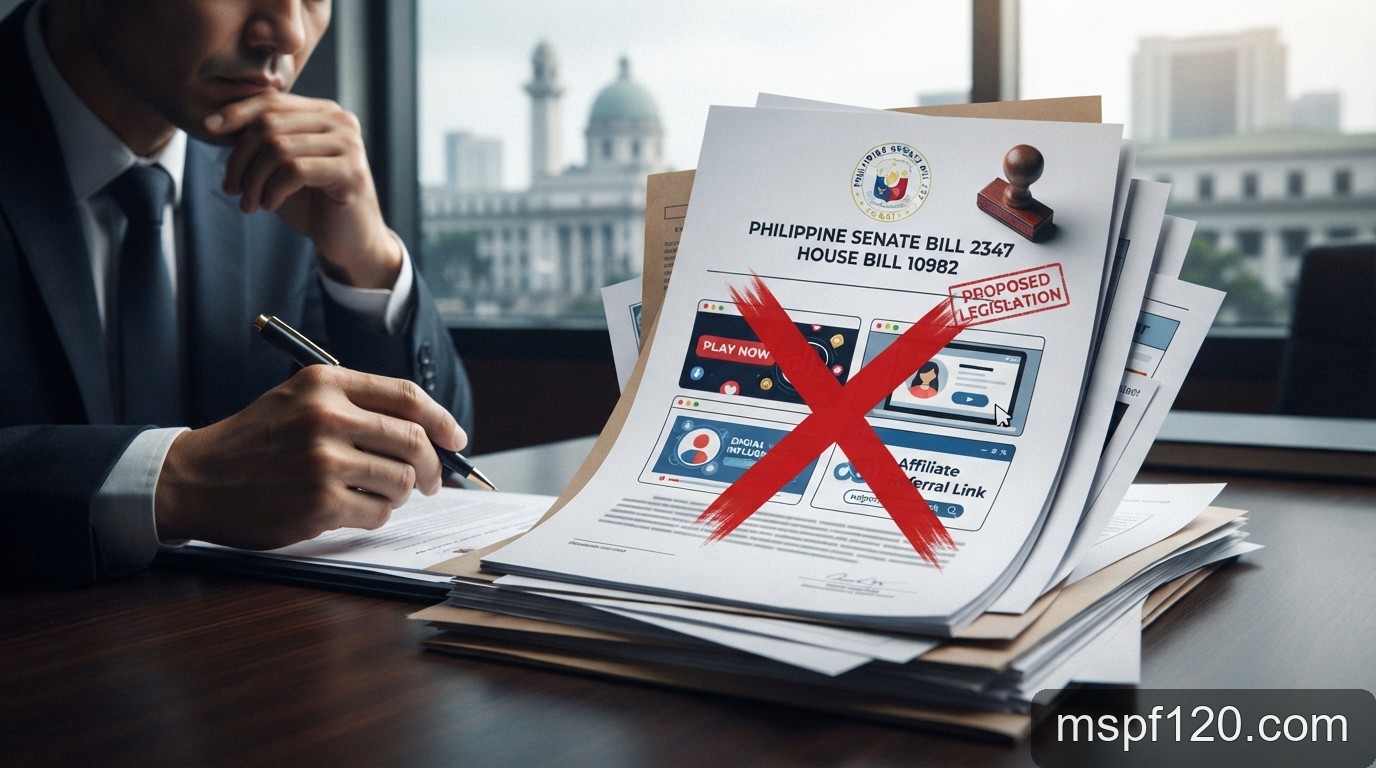
The Philippines is currently navigating a critical legislative period with Senate Bill (SB) 2347 and House Bill (HB) 10982, both aiming to implement a comprehensive ban on gambling advertisements. These proposals, driven by concerns over public health and responsible gambling, are set to profoundly reshape how online casinos acquire players, moving away from traditional affiliate and influencer-led models towards more direct and compliant communication channels.
This analysis delves into the specific provisions of these bills and their potential operational impact on the digital acquisition landscape.
Key Legislative Proposals and Their Scope
- SB 2347 (Gambling Advertising Prohibition Act): Filed by Senator Francis "Chiz" Escudero on July 26, 2026, this bill proposes a nationwide ban on gambling advertisements and sponsorships across all media, including online platforms and social media. It explicitly targets celebrity endorsements, influencer campaigns, and bonus incentives.
- HB 10982 (Online Gambling Advertising Prohibition Act of 2026): Authored by Cebu 3rd District Rep. Karen Hope Garcia and submitted on August 26, 2026, this bill specifically prohibits online gambling advertising, promotions, endorsements, and sponsorships across all digital and traditional media. It directly bans promotions by influencers, content creators, affiliate marketers, celebrities, and vloggers, along with bonuses, free bets, and referral codes.
- Cross-Promotion Restrictions: HB 10982 also includes provisions against cross-promotion, meaning advertisements for land-based products sharing a brand with an online gambling operator would be prohibited.
- Transition and Penalties: SB 2347 provides a one-year transition period for compliance, while both bills outline significant penalties for violations, including substantial fines, imprisonment, and license revocations for operators, media companies, and public figures.
- Exclusions: The proposed bans would not cover legal and licensed forms of gambling such as authorized casinos, PCSO lotteries, horse racing, and licensed cockfighting, provided they adhere to responsible gaming advisories.
Impact on Affiliate Marketing and Influencer Models
The explicit prohibition of promotions by influencers, content creators, and affiliate marketers in both SB 2347 and HB 10982 marks a significant shift. Historically, these channels have been central to player acquisition for online casinos in the Philippines. The proposed legislation aims to dismantle these models, forcing operators to reconsider their entire marketing ecosystem.
For affiliate marketers, the ban would eliminate the primary mechanism for generating traffic and conversions. This necessitates a pivot towards alternative, compliant strategies that do not involve direct advertising or promotional content. Similarly, influencers, who have leveraged their platforms to promote gambling services, would face legal repercussions, including disgorgement of payments and potential bans from future endorsements.
Operational Shifts for Online Casino Operators
Online casino operators will need to adapt rapidly to a post-advertising ban environment. The focus will likely shift towards direct-to-player communication channels that comply with the new regulations. This could include:
- Enhanced CRM and Retention: Greater emphasis on customer relationship management (CRM) strategies to retain existing players through personalized, non-promotional communications.
- Direct Marketing (with restrictions): Exploring direct marketing channels like email and SMS, but strictly adhering to responsible gambling advisories and avoiding any content that could be construed as promotional or incentivizing betting.
- Product Innovation: Focusing on improving the core product offering, user experience, and game quality to attract and retain players organically, rather than through external advertising.
- Brand Building through Responsible Engagement: Investing in corporate social responsibility initiatives and community engagement that align with responsible gambling principles, building brand trust without direct promotion.
Enforcement Challenges and Regulatory Nuances
The pervasive nature of online content presents significant enforcement challenges for a nationwide advertising ban. The bills propose penalties for social media platforms, media companies, advertising technology firms, and internet service providers for non-compliance, indicating a broad scope of enforcement. However, monitoring and regulating content across countless digital platforms will require substantial resources and sophisticated mechanisms.
A key concern for regulated operators is the potential for a blanket advertising ban to inadvertently benefit illegal platforms. Unlicensed operators, by their nature, do not adhere to regulatory frameworks and may continue to advertise, making it harder for legitimate, compliant businesses to differentiate themselves and attract players responsibly. This could lead to a less safe environment for players, as they may be drawn to unregulated sites that offer no player protection.
Economic Implications for the Gaming Sector
The proposed advertising bans carry significant economic implications for the online gambling industry in the Philippines. A reduction in player acquisition channels could lead to decreased revenue for operators, potentially impacting employment within the sector and related businesses, such as marketing agencies and technology providers that support affiliate networks.
The one-year transition period proposed in SB 2347 aims to provide operators with time to adjust, but the long-term economic impact remains a critical consideration.
Furthermore, the ban on bonuses, free bets, and referral codes could alter player engagement dynamics. These incentives are often used to attract new players and encourage loyalty. Their prohibition may necessitate operators to innovate in other areas to maintain player interest and market share.
The Path Forward for Operators and Players
As SB 2347 and HB 10982 progress through the legislative process, their final form and implementation timeline are subject to further discussions and amendments. For Filipino casino players, these changes signify a shift towards a more regulated and potentially safer gambling environment, with increased emphasis on responsible gaming advisories and stricter age and identity verification requirements.
For operators, the imperative is to proactively develop compliant acquisition and retention strategies, prioritizing ethical practices and long-term sustainability in a rapidly evolving regulatory landscape. Staying informed about the legislative developments and adapting business models accordingly will be crucial for navigating this new era of online gambling in the Philippines.
参考资料
GCash payout-speed dashboard team — 412 verified Q1 2026 paid cash-outs benched, 22 operator + game reviews published, full P95 percentile breakdowns. 21+ Filipino editorial only.
21+ only · entertainment value only · DOH 1553 if you ever lose control.
Play Now · 21+